| « HeXx Henderson Plays at Gig-FX from NAMM 2010 | Classic Reverb Stories or “Do You Hear An Echo?" » |
Bebopping at Midnight
 By Paul Bourgeois
 , the movie about the people who changed jazz music… It is about nobody in particular, and yet about them all. Dexter Gordon, Herbie Hancock, Billie Higgins, Eric Lelann, John McLaughlin, Pierre Michelot, Wayne Shorter, Ron Carter, Palle Mikkelborg, Mads Vinding, Cheikh Fall, Michel Perez, Tony Williams, Freddie Hubbard and Cedar Walton. And that’s Bobby McFerrin on vocals on “Round Midnight” in the titles.
I keep coming back to the words, cutting back, popping out in odd places, weaving around back to the theme, trying to get it just right, like they might do with the notes in bebop. It’s not about “missing a note” and finding your way back, as they said of Charlie Parker. It’s not about speed. It’s about trying to find a place for the note that doesn’t fit, but it does. It’s like standing in line with the sergeant screaming down the bridge of your nose, “Soldier, what do you think your doing?” Bebop is about trying to say something surprising that might wake people up, hearing it, afraid of losing it, afraid of going too far.
Coltrane was lucky when it came to the war. He was 18 when he was drafted in August, 1945 at the end of the war, too late to see any fighting, and he served for only a year in the Navy. He was first stationed in California and then with a Navy Jazz band in Oahu called The Melody Masters. He was able to fund a musical education at Granoff Studios with Veteran’s Administration benefits. Was it the war that changed the music? Is it always war that changes things? ‘Trane’s “Love Supreme” was about peace, but it’s the hard-edged horn that tears into us and holds us down.
Maybe it’s all about progression… and maybe not. Why does the key of D work in E sometimes? What is the root note really? What does the bar resolve to? What the hell is melody once you break it down to its rhythmic parts? I don’t know.
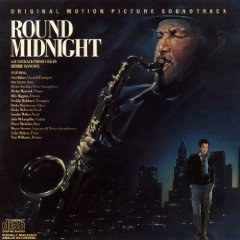
“Listen to that Francis, the swing bands, used to be all straight tunings, seventh bars, and then with the Basie Band I heard Lester Young, and he sounded like he came out of the blue, because he was playing all the color tones, the sixths and the ninths and major sevenths. Yeah, like Debussy and Ravel. And Charlie Parker came on and he began to expand and he went into elevenths, thirteenths, and flat fives. Luckily, I was going in the same direction already. You just don’t go out and pick a style off a tree one day. The tree is inside you, growing naturally.”
Those are the words of Dale Turner, a saxophonist who changed the direction of Jazz, as played by Dexter Gordon, which is appropriate, because that’s who Dexter Gordon is. I don’t know who Dale Turner was supposed to be in the film, maybe Thelonius Monk or John Coltrane. Maybe Lester Young or Bud Powell. Dexter’s tones in the film are those of Lester Young, and Coltrane, and Thelonius…
Thelonius’s parents paid for formal lessons for his sister while Monk hid around the corner and worked it out for himself. The world says, “Monk changed music” like Parker changed music, but nobody can know what Monk did unless they hear his original recordings. And everybody plays Monk, his beautiful and perfect melodies. I heard a tribute album to Monk once, jazz and non-jazz artist coming into give their interpretation of his music. My uncle saw him play live once — funky hat, cigarette jammed between his fingers while he played, spreading ash on the keyboard.
T. Monk was born in 1917. In the early to mid 1940s, Monk was the house pianist at Minton’s Playhouse. He made his first recordings with the Coleman Hawkin’s Quintet in 1944. So I figure Thelonious managed to avoid military service. In the movie “Round Midnight” Dale Turner’s New York manager (Martin Scorcese) makes a point about getting Dale Turner his New York Cabaret Card. Monk lost his Cabaret card in 1951.
Peter Frampton does T. Monk’s “Work” in the Album “That’s the Way I feel Now.” And I thought, “Interesting, but too far gone to be real.” Then I heard T. Monk himself, thinking, and every note of Monk’s came to my ears so wrong it was right. To Dale Turner’s ears, or Dexter Gordon’s, it would have been “…the color tones, the sixths and the ninths and major sevenths… elevenths, thirteenths, and flat fives…” And I bow to those ears. And I feel a lump in my throat because I will never truly hear like a player hears.
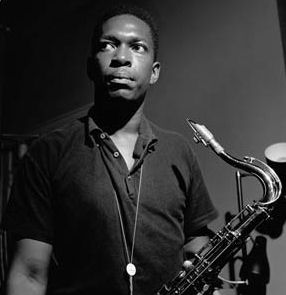
This is music that plays at you from the inside, like Coltrane’s “A Love Supreme”,with ‘Trane on sax, Elvin Jones on drums, Jimmie Garrison on bass, McCoy Tyner on piano. It has been described as a transition between traditional and free jazz, which is a lie. There is nothing free about free jazz. The rhythm structures are so strict and internalized. I am listening to the introduction to the 1965 live performance in Antibes France and I am immediately brought back to the movie Round Midnight.
Coltrane, he sneaks into your head like a meditation, and then he blasts you away with that horn on a slick and weaving roller-coaster of sound. I am stunned and can say nothing. I leave it to Dale Turner.
“You know, it just occurred to me that be-bop was created by the cats who did get out of the army.”
 This entry was posted by paul.bourgeois and is filed under Welcome, Monday Morning Musical Musings, Paul Bourgeois. Tags: april fool, be-bop, coltrane, dexter gordon, herbie hancock, jazz, round midnight, thelonius monk, tunings, war
 2 comments

I wrote about Thelonious Monk and John Coltrane because I could hear them in the playing, certainly in the title song and in Dexter’s use of the “color tones”. Coltrane spent time in Europe, as did many black artists, because attitudes were different to race and music than in the States. Dexter’s horn has a relaxed, breathy tone, very similar to Lester Young. on specious grounds. For many performers, the revocation of their cabaret card resulted in the loss of their livelihood. Thelonious Monks Cabaret card was revoked by police, as were those of Charlie Parker, Elmo Hope, Billy Higgins and Billie Holiday. The Cabaret card was abolished in 1967, which gives us some idea of the era of the movie. The film is dedicated to Lester Young and Bud Powell and is full of references to jazz musicians and incidents. Dale Turner recounts a beating he received in the army and his release and I am wondering what jazz artist this refers to.

As a guitar player I poured over Coltrane hits stealing those riffs and calling them my own. ha! I learned so much from so many of those artists. It’s music man, it took a while to realize that it doesn’t matter if it is blown, keyed, banged or plucked on a string it’s music man.
It is their sound that prompted me to learn more theory and expand my scales play more chord shapes and inversions for different flavors.
Great post, I love this guy.
Print It Now